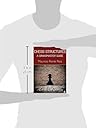

desertcart.com: Chess Structures: 9781784830007: Flores Rios, Mauricio: Books Review: One of my favorite chess books. - The books takes the most common structures, consolidates the main ideas for both sides, and provides full sample games to illustrate implementation. This is useful and efficient for an intermediate player like me (I'm around 1800-2000 in rating). The book focuses on concepts and application rather than memorization of variations. I wish more opening books did what this book does. It is crucial to know your opponent's plans well and to thwart them, rather than to only focus on what you want to do or your novelty. Additionally, even if you do get your ideal position, it often takes 20 or 30 more moves before you can realize the advantage; therein lies the value of showing and annotating full games. Converting is hard. Some minor critiques: The author's analyses do not always match up with stockfish, though this doesn't diminish the book's value. For example, in one of the games the author describes one of young Carlsen's moves/plans to convert an advantage as inaccurate, while that move is actually Stockfish 14 NNUE's top recommendation. Also, the book would profit from adding example games for certain structures (for example, more black wins in the Caro Kann structure). Sometimes appears to me that the author harbors a bias against some openings/structures, or that some structures required more attention than was given. Review: Perfect Guide to Important Pawn Structures, their Positional Characteristics and Tactical Motifs - One of the best and most instructional chess books I've ever read -- and I've read quite a few. I'd never heard of Mauricio Flores Rios, a Chilean GM, before reading this book. After reading a few chapters, it's clear that he is a very capable master who combines positional understanding with the kind of tactical prowess that wins chess games. (Chess is 99% tactics, 1% strategy). According to Wikipedia, Flores Rios was the top GM in Chile when he migrated to the US to play for the University of Texas in Brownsville. Each chapter of the book is devoted to covering, in depth, and from both sides, one type of pawn structure. After showing the salient characteristics of the structure and stating which plans have been found to be most effective in handling that structure, he walks you, in depth, through several games in which that structure occurs. What's really great and special about the book is that he illustrates the kind of tactics that you need to keep in mind when handling each position. The book is doubly valuable in that he covers each position from a neutral perspective, showing the best plans for Black and White in each position, and analyzing, in depth, games which show the typical plans in action. I think that each chapter here is more instructional than the average opening book on each particular opening covered. For example, if you play the Caro-Kann as Black, you're going to need to know about how to achieve the ...c5 pawn break -- or how to fight against it as White. Flores Rios has got you covered. Same with the Slav, the Grunfeld, and the other dozen or more structures covered. Highly recommended for anyone below GM level.
| Best Sellers Rank | #569,235 in Books ( See Top 100 in Books ) #591 in Chess (Books) |
| Customer Reviews | 4.6 out of 5 stars 308 Reviews |
A**N
One of my favorite chess books.
The books takes the most common structures, consolidates the main ideas for both sides, and provides full sample games to illustrate implementation. This is useful and efficient for an intermediate player like me (I'm around 1800-2000 in rating). The book focuses on concepts and application rather than memorization of variations. I wish more opening books did what this book does. It is crucial to know your opponent's plans well and to thwart them, rather than to only focus on what you want to do or your novelty. Additionally, even if you do get your ideal position, it often takes 20 or 30 more moves before you can realize the advantage; therein lies the value of showing and annotating full games. Converting is hard. Some minor critiques: The author's analyses do not always match up with stockfish, though this doesn't diminish the book's value. For example, in one of the games the author describes one of young Carlsen's moves/plans to convert an advantage as inaccurate, while that move is actually Stockfish 14 NNUE's top recommendation. Also, the book would profit from adding example games for certain structures (for example, more black wins in the Caro Kann structure). Sometimes appears to me that the author harbors a bias against some openings/structures, or that some structures required more attention than was given.
N**O
Perfect Guide to Important Pawn Structures, their Positional Characteristics and Tactical Motifs
One of the best and most instructional chess books I've ever read -- and I've read quite a few. I'd never heard of Mauricio Flores Rios, a Chilean GM, before reading this book. After reading a few chapters, it's clear that he is a very capable master who combines positional understanding with the kind of tactical prowess that wins chess games. (Chess is 99% tactics, 1% strategy). According to Wikipedia, Flores Rios was the top GM in Chile when he migrated to the US to play for the University of Texas in Brownsville. Each chapter of the book is devoted to covering, in depth, and from both sides, one type of pawn structure. After showing the salient characteristics of the structure and stating which plans have been found to be most effective in handling that structure, he walks you, in depth, through several games in which that structure occurs. What's really great and special about the book is that he illustrates the kind of tactics that you need to keep in mind when handling each position. The book is doubly valuable in that he covers each position from a neutral perspective, showing the best plans for Black and White in each position, and analyzing, in depth, games which show the typical plans in action. I think that each chapter here is more instructional than the average opening book on each particular opening covered. For example, if you play the Caro-Kann as Black, you're going to need to know about how to achieve the ...c5 pawn break -- or how to fight against it as White. Flores Rios has got you covered. Same with the Slav, the Grunfeld, and the other dozen or more structures covered. Highly recommended for anyone below GM level.
T**6
Really good reading for all kinds of chess players!
I'd consider myself an intermediate player and found this book very useful. I really like the layout of each chapter, where the author first gives general plans for both sides before illustrating these plans several times in the form of commentated games. Before and after each of the games presented in each chapter the author explains what the main idea is as far as the pawn structure is concerned. I'm not sure how much I subscribe to the notion that certain levels of players should buy certain chess books because they aren't advanced enough. Sure, if you're just beginning to play or only have a very rudimentary knowledge of the game then this book probably isn't for you. However, if that is your level of chess you're probably not checking this book out. This isn't advanced mathematics or theoretical physics ... it's a book about chess and anyone with the motivation to even think about buying a book like this will very likely get *something* out of reading it. Higher rated players will glean more from this book than lower rated players, but there is something useful for almost everyone. Beyond the material itself I thought the physical book itself was well-constructed. It is printed on high-quality paper and the book is easy to work with. Unfortunately the package it was shipped in wasn't great and there ended up being some minor damage done to the outside front cover ... of course no knocks to the star rating of the book here. All together highly recommended!
M**H
Good resource, lots of fun games.
There has been least one instance so far where the diagram doesn't seem to jive with the text, but in any book with this much information, there is bound to be one or two minor inaccuracies. Also, I would have liked a bit more in the Grunfeld chapter (or maybe a second chapter with a different line or two as was done with the Najdorf, French, and KID), as I really enjoy playing it. It seemed like all the games followed an exchange line with an open c-file. While I don't think it's the most absolutely perfect book on pawn structures, I'm finding it to be a valuable addition to that (large) section of my chess library. I particularly liked the games with Karpov being Karpov. More of those would have been nice, since they fit in quite well with the overall theme of the book.
P**B
the author's writing is excellent and accessible to class players (I am a USCF ...
I find the book highly instructive for several reasons. First, I find learning the structures and plans help me understand the opening I play a lot more than just memorizing moves. When the tactics run out, I am now less likely to drift as I know the basic plans to pursue. Second, the book goes beyond the structures, but also teaches basic middlegame and endgame principles. For this reason, I find myself going through games in the book, even those not in my opening/structure. Third, the author's writing is excellent and accessible to class players (I am a USCF class B). He knows when to add variations and when to keep going. It also reads like a college textbook. The beginning of a chapter has a summary of the basic plans, and every game has an introduction of the concept to be introduced and a conclusion of what was learned. This book is destined to be a classic.
V**R
One of the best chess books on opening pawn structures and plans for both sides
I've gone through most of the book over a long period of time. For instance, when I was losing a lot to the King's Indian, I read all the KID chapters from the book. I must have been around 1800 USCF at that point. However, that didn't quite work out. I'll explain: The only way you gain something from the book is if you first amass some experience playing a certain structure, and you analyze your games, and keep accumulating experience about everything that can go wrong, everything that can go right, etc. Then you read this book, and draw upon your experience and relate what you now learn to your experiences in the past. It is only when you do that do you really understand, assimilate, and hopefully be able to apply what you learn in your future games. The mistake I made when I first read these chapters was to do it without the necessary experience. Fast forward about a year, I had played and analyzed many games as white against the KID. I went back to those chapters and had a much easier time with them. A similar story with the Grunfeld center structures. Had to accumulate some games and analyses of those gaames before I could really appreciate the points made about the c file, control of certain squares, to support promotion of the d pawn, etc and only then could I appreciate the Karpov games in that chapter. So for these reasons, I'd recommend working with this book only after you've played at least 10 games in the structure you want to study AND have deeply analyzed and annotated them yourself. So I'd say this book works best for 2000+ USCF (I'm sure I'll gain a lot more from it after accumulating some more experience). You can certainly read and learn something from it even at lower levels than that but the recommendation I made is for optimal gains. Get the book! PS: The only disappointment I had was with the coverage of the Carlsbad structure. There simply wasn't enough on white's f3 e4 ideas and no examples of what happens when white is able to achieve it. I had to go back to my old favorite Soltis' pawn structure chess to see a Susan Polgar game that illustrated some ideas in that structure, but I still feel like the Carlsbad hasn't received a good enough treatment. Even Matthew Sadler's QGD book doesn't have many examples (if at all any) of that plan by white if I remember correctly. However, I'm not taking a star off for this because of how great everything else is.
S**S
I wanted this book but in better shape.
I bought this book as a gift for my husband who absolutely loves playing chess. He is definitely ready for a more in depth study of different chess moves, beginnings, middle and endings. I was incredibly disappointed that I spent so much on a book only for it to arrive in such horrible shape. The entire book was twisted out of shape and the middle is so messed up it won't sit flat on any surface.
D**E
The ultimate guide to planning in chess
Planning all starts from the opening. Don't let people trick you into not studying the opening, the opening dictates what you do for the rest of the game. I knew before I even got this book that it was going to be a critical part of advanced training. This book goes over the plans of common structures that arise from various openings. These are the plans that you must know if you want to take your game and understanding to the "next level." It shows a basic summary of plans for both White and Black in each chapter, then details the common moves necessary to achieve those plans and goes ahead with an illustrative game to show how the plans were executed by masters. --- Realistically, in practical training, this is what you'll experience>see the plans> memorize them>go over the illustrated games> Go play your own game, attempt to execute the plan>Fail>Reevaluate what you did wrong when executing the plan>refine it and ultimately raise your skill level across various structures to a point that leave <2000 rated players in the dust. With the proper understanding of the general plans and various examples, finding the right moves and way forward is a breeze.
Trustpilot
1 month ago
2 months ago